
PICKING TIPS

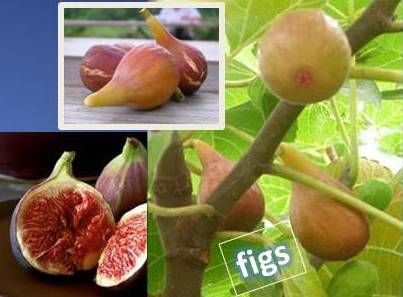
TIPS FOR PICKING FIGS
Figs are climacteric. That means they will continue to ripen after they are picked. First, you must recognize when they have reached the point so that they will continue to ripen. In figs, this is marked by the fruit pedicel -or stem- which can be very short, about ¼ inch or less. When the stem is straight, they will not ripen any further if picked. When the stem starts to bend, it will continue to ripen. Usually, the fruit will also begin to bend. Only in varieties with very short stems will this be difficult to see. Next, you will see a change in color: at first, a yellow cast, and in some varieties, like Brown Turkey, they will turn shades of brown. In the final stage of ripening, they will develop cracks in the skin. At this point, they are very, very sweet and are oozing sugar. The bees love the sugar and start lapping it up, making a wound that oozes more sugar, and before you know it, there is a whole that looks like a bird pecked the fig. When picking very ripe figs, I always give it a little bump to scare the bee away before I pick. You should try to pick the fig with the stem on it. If you tear it off, the life of the fig in the refrigerator is shortened greatly. Figs are best used the day you pick them or within a day or so, and you should refrigerate them as soon as possible. Picked properly, they will even ripen in the refrigerator. That is why you rarely see true southern figs in the store. They can not control the shelf life.
TIPS FOR PICKING Blueberries
Blueberries should be totally blue. Sometimes this is
difficult so here are some tips a little/tiny bit soft. When they reach this
stage they detach from the stem easily. So the trick is put your bucket
around your waste or attached to a harness over your shoulders but
many just put strap on the bucket and put it around the neck. They take
a small cup and run their fingers lightly over a cluster berries. The ripe
berries will detach easily. They will have a dry scar and keep well in the
refrigerator. The reason this works is that they are Rabbiteye
blueberries (all our varieties are rabbiteye with some ripening early and
some late) that do not ripen all at once. One bush can pick for 6 weeks
or more. Blueberries are NOT climacteric like figs, the procedure
described below. Blueberries need to be picked ripe.
TIPS FOR PICKING persimmons
Persimmons are climacteric like figs. They have multiple stages of ripeness. The climacteric feature is only if they have a yellow tint. If they are uniformly green they will not ripen. This can be a little tricky as the whitish waxy layer can mask the yellow color. They will turn very light yellow to fully yellow and eventually orange. Persimmons have a woody pedicle (the stem that attaches the fruit to the tree) that has to be cut with snippers. If you twist them off, you will either damage the fruit or damage the tree.
How to Pick Blackberries
Blackberries are not climacteric, so they need to be ripe at picking. They should be totally black with no red showing. Dull black is the ripest but shiny black is okay. Un like raspberries they pick with the torus inside the berry. There are two types of Blackberries, those are born last year’s canes called floracanes, these are the ones that bear fruit in the spring till mid-summer then there are primo cane Berries that bloom from mid-summer till fall. Both types can be on the same plant.
How to Pick Muscadines
You pick muscadines one at a time, unlike bunch grapes such as seedless Concords or Jacques. Muscadines are NOT climacteric, which means they will not ripen after they are picked. If you pick them green or sour, they will remain green and sour. You pick Muscadines one berry at a time. You do not pick clusters. The best way to pick a muscadine, bronze or black, is by softness. You need to look at the grape and judge by the color if it needs to be felt. Then feel the grape ... if it is hard, do not pick it. If you think it is a little soft, the next step is to do a taste test. Is it sweet??? Is the skin tender??? Repeat this process until you learn by feel what a ripe muscadine grape is. The pollinating insects of muscadines, tiny green bees, move up and down rows but not across them, which is why there are two varieties in each row. The bottom line is: if you are using color to decide whether to feel a berry, you have to associate the color with the variety. This is not as difficult as it sounds... after a little bit, you will recognize that this vine is a little more bronze, or that this has a little pink, or that this is a little more yellow, so you know when to feel the grape. In no time at all you will become an experienced muscadine picker, and with such big berries, the bucket is filled very quickly.
How to Pick Seedless Muscadine Grapes
Seedless muscadines (sunberries) are like seeded muscadines. They should be picked one at a time too and color is your tip. OhMy should be a translucent yellow, OhGosh should be a deep black with no tiny light spots or purplish cast. OhGoodness
should be almost hard and have a black appearance but a little purplish tint is okay. They will pick with a little short pedicle attached that rubs off easily. This variety keeps exceptionally well in the refrigerator…months. Oh Yes Is like OhGosh and needs to be dark black. Razzmatazz is the exception, because of its small red size it is picked
buy the bunch. Look for uniformly dark red clusters. The Key is dark red.
How to Pick Muscadines
You pick muscadines one at a time, unlike bunch grapes such as seedless Concords or Jacques. Muscadines are NOT climacteric, which means they will not ripen after they are picked. If you pick them green or sour, they will remain green and sour. You pick Muscadines one berry at a time. You do not pick clusters. The best way to pick a muscadine, bronze or black, is by softness. You need to look at the grape and judge by the color if it needs to be felt. Then feel the grape ... if it is hard, do not pick it. If you think it is a little soft, the next step is to do a taste test. Is it sweet??? Is the skin tender??? Repeat this process until you learn by feel what a ripe muscadine grape is. The pollinating insects of muscadines, tiny green bees, move up and down rows but not across them, which is why there are two varieties in each row. The bottom line is: if you are using color to decide whether to feel a berry, you have to associate the color with the variety. This is not as difficult as it sounds... after a little bit, you will recognize that this vine is a little more bronze, or that this has a little pink, or that this is a little more yellow, so you know when to feel the grape. In no time at all you will become an experienced muscadine picker, and with such big berries, the bucket is filled very quickly.
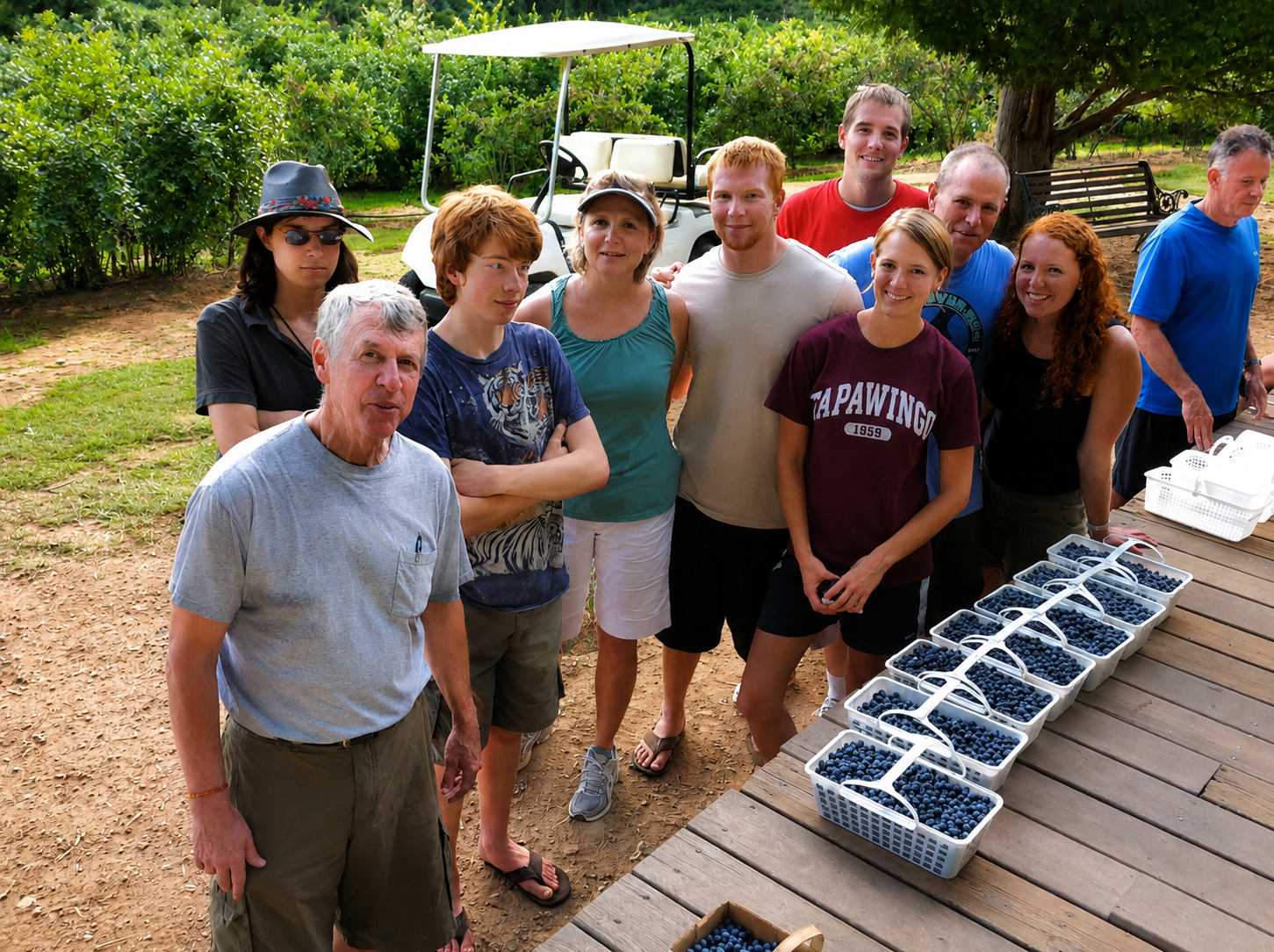
Bring Your Own Buckets
We encourage you to bring your own containers for picking. Or alternatively, we welcome you to use our containers in the field for picking, then transfer the berries to your own containers to take home.
Recommendations for containers:
No bags. Bags do not work well as they crush the berries. Long and low containers work well for blackberries. Blackberries crush easily if you pile them too high. For blueberries, a bucket no bigger than 2 gallons works well. Containers deeper than 2 gallons will crush the blueberries.
DRESS FOR SUCCESS
A loose-fitting cotton shirt and/or shirt with UPF protection, a floppy hat to shade your face, and good shoes. Please no sandals or flip-flops. The terrain is uneven and, in places, steep. Please wear shoes with good tread for walking around the farm. Carry water with you into the field. If you do not stay hydrated, your body temperature can rise very quickly and become very harmful. Symptoms, in addition to dizziness and feeling bad, can be failing to sweat or excessive sweating. If you experience any of these symptoms, seek shade and use wet towels or whatever you can to lower your body temperature. Ice on neck, armpits, forehead. Get help!- even using your cell phone to call the staff on the porch to come get you!
